Smartphones have made financial information available almost everywhere. A modern online trading app can show prices, charts, order history, portfolio values and alerts in seconds. This convenience can be useful, but it can also encourage frequent decisions without enough planning. Anyone comparing a dabba trading app with regulated services should look beyond the interface and understand how the underlying transactions work.
Essential features of a Online trading app in India
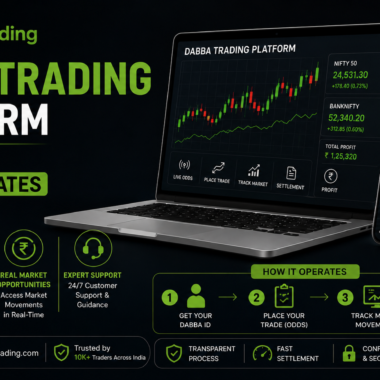
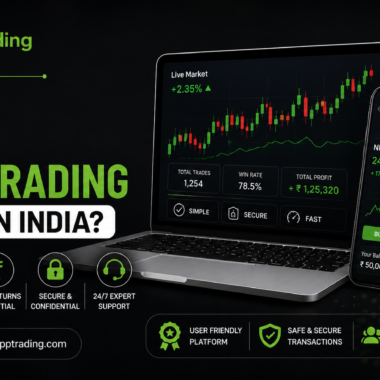
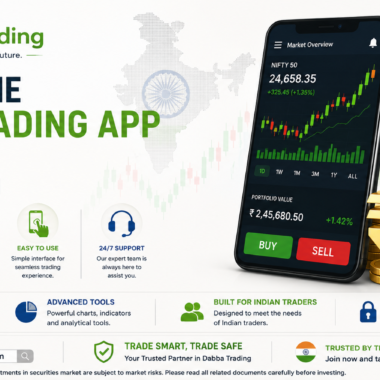
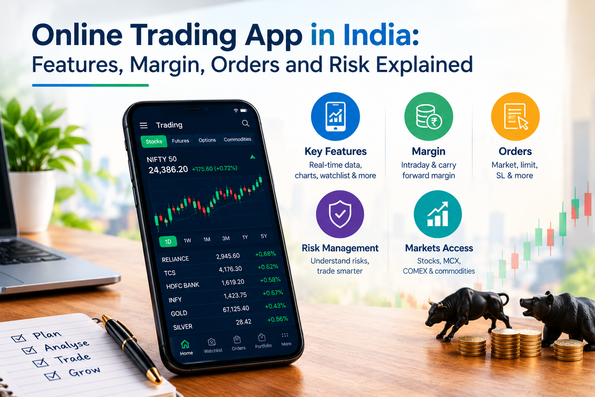
A practical app usually brings several functions together: watchlists, charts, search, order entry, portfolio monitoring and account statements. Good navigation matters because traders often need to check information quickly. Important figures should be easy to read, and the application should clearly distinguish pending, executed and cancelled orders.
Users should also check whether the app explains its charges. A low-looking headline fee may not represent the full cost once spreads, taxes or other applicable charges are considered.
Order types and execution
Market orders prioritize execution, while limit orders prioritize a selected price. Stop-based instructions can be used to manage risk, subject to the behavior and rules of the relevant market. Traders should learn these differences before placing live orders.
Execution should also be transparent. A user deserves to know whether the order enters a recognized market, how confirmation is generated and where transaction records can be reviewed. A familiar order ticket does not prove that the service follows a regulated process.
Understanding margin
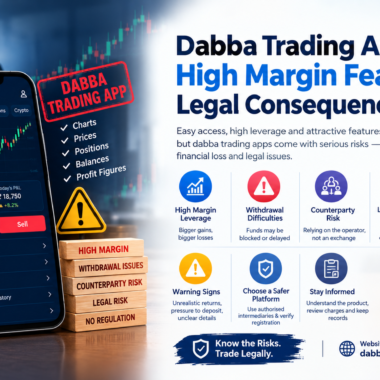
Margin is especially important for derivatives and leveraged positions. It represents capital required to support an exposure and can change as market conditions or rules change. If a position moves against the trader, additional funds may be required or the position may be reduced.
High leverage can make gains look impressive when prices move favorably, but the reverse is equally true. Traders should calculate worst-case scenarios and avoid choosing a service solely because it offers a large margin facility.
Risk in fast-moving markets
Prices can move sharply after economic announcements, company news or unexpected global events. During such periods, spreads may widen and execution prices can differ from expectations. A trading app may continue to function normally while the financial risk of each transaction increases.
Stop-loss orders and alerts can help with planning, but they do not make a loss impossible. Risk management must begin with position size and continue through the entire trade.
How to assess a service in India
Users should verify the operator’s legal identity and relevant regulatory status before depositing funds. They should read account-opening documents, understand withdrawal conditions and confirm where statements are maintained. Independent verification is preferable to relying on promotional claims or social-media recommendations.
This is particularly important when a service presents itself as a Dabba Trading App. An app can imitate the appearance of a conventional broker while using a fundamentally different arrangement for recording and settling trades.
Account security
A trading account contains sensitive information and should be protected like a bank account. Strong passwords, multi-factor authentication and device security reduce the chance of unauthorized access. Users should be suspicious of requests for OTPs, screen sharing or payments to personal accounts.
Reviewing account activity regularly is another simple protection. If a transaction or login looks unfamiliar, contact the service through an independently verified support channel.
Trading discipline
An app makes it easy to trade, but ease of access should not become a reason to trade more often. Traders can benefit from maintaining a written plan covering entry criteria, position size, maximum loss and exit conditions. Keeping a journal can reveal whether decisions are being driven by analysis or emotion.
The goal is consistency, not constant activity.
Conclusion
A good trading app should provide clear market information, understandable orders, transparent charges and useful position tracking. These features are meaningful only when supported by a legitimate and transparent operating structure. When researching dabba trading in india, users should verify regulation, settlement and withdrawal arrangements before focusing on convenience.
Technology can simplify trading, but responsible participation still depends on knowledge, discipline and risk control.
Keyword note: Readers comparing services should research dabba trading platform carefully, verify the operator’s identity and understand how orders, records, settlement and withdrawals are handled.
Keyword note: Readers comparing services should research dabba trading platform carefully, verify the operator’s identity and understand how orders, records, settlement and withdrawals are handled.
Keyword note: Readers comparing services should research dabba trading in india carefully, verify the operator’s identity and understand how orders, records, settlement and withdrawals are handled.
A sensible first step
Instead of asking which platform offers the highest leverage, ask which service provides the clearest evidence and the strongest accountability. Compare legal information, regulatory status, execution details, account statements and withdrawal terms. Then consider costs and features.
The order of these questions matters. A convenient feature is not useful if the underlying transaction structure is unclear. Reliability should be established before convenience becomes the deciding factor.
A convenient app should make responsible behavior easier, not encourage larger or more frequent positions.
Users should also distinguish between information and execution. A chart can be accurate while the service displaying it is unsuitable for placing a real transaction. Review every important claim independently, especially claims involving regulation, returns, leverage and withdrawals. Taking additional time at the beginning is usually easier than trying to resolve a problem after money has already been transferred.
Another useful habit is to avoid making decisions from a single data point. Price, volume, news, margin and account information should be considered together. If an application encourages rapid action without giving the user enough time to understand the transaction, the convenience of the interface can become a source of avoidable risk.